

Pro Tips & Projects
Smart fixes. Real projects. Straight talk from your local pros.
Keeping a home running smoothly is a full-time job — and most people don’t have the time, the tools, or the patience to figure it all out. That’s where we come in.
Welcome to your go-to hub for expert tips, real project breakdowns, money-saving strategies, and homeowner how-tos — all written in clear, real-world language, never contractor-speak.
Whether you’re trying to stay ahead of problems, plan a remodel, or avoid getting ripped off, you’ll find exactly what you need right here… from pros who do this every day.
No fluff. No guesswork. Just straight-up help you can use.
What You’ll Find Here:
Pro Tips to extend the life of your home
DIY-Friendly Fixes anyone can handle safely
Project Breakdowns from real jobs we've completed
Money-Saving Advice to avoid costly mistakes
Before & After Transformations to spark ideas
Seasonal Checklists to keep your home in top shape
Need Personalized Advice?
If you ever want help with a repair, a renovation idea, or just a second opinion, we’re only a message away.

Simple Ways to Make Your Home Feel New Again: Better Lighting and Brighter Spaces
Simple Ways to Make Your Home Feel New Again: Better Lighting and Brighter Spaces
Does your home feel a little tired? Maybe you’ve lived in your Salt Lake Valley house for years, or perhaps you recently moved into a home in Herriman or Riverton that still doesn’t quite feel like yours. The good news is that refreshing your home doesn’t always require a massive remodel. Sometimes, the fastest way to transform a space is simply improving the lighting.
Welcome to Part 1 of our series: Simple Ways to Make Your Home Feel New Again.
Whether you live in a cozy Magna bungalow or a larger home in West Valley City, lighting plays a huge role in how your home feels day to day. A few strategic upgrades can make rooms feel brighter, warmer, and more modern without tearing down a single wall.
Moving Beyond Builder-Grade Lighting
If your home was built within the last couple of decades, you probably know exactly what "builder-grade" lighting looks like. Those basic dome fixtures in hallways and bedrooms may work fine, but they rarely add character or warmth to a room.
Replacing outdated fixtures is one of the easiest ways to make a home feel more custom. Modern semi-flush fixtures, pendant lights, or updated chandeliers can instantly improve the look of a space while also distributing light more effectively.
Bulb color matters too. Many older homes rely on harsh, cool-toned lighting that can make rooms feel sterile. Switching to warmer LED bulbs in the 2700K to 3000K range creates a softer, more welcoming atmosphere that feels far more comfortable during long Utah winters.
The Power of Layered Lighting
One of the biggest lighting mistakes homeowners make is relying entirely on a single overhead fixture. This creates harsh shadows and can make rooms feel flat or closed in.
A better approach is layered lighting. That simply means combining different light sources throughout a room:
Ambient lighting for overall brightness
Task lighting for specific activities like cooking or reading
Accent lighting to highlight artwork, shelves, or architectural features
For example, under-cabinet kitchen lighting, floor lamps, or wall sconces can completely change the mood of a room without major construction.
In the evening, softer layered lighting often feels much more relaxing than blasting a bright ceiling fixture over the entire space.
Making Darker Utah Homes Feel Brighter
Many homes throughout the Salt Lake Valley have darker basements, north-facing rooms, or spaces that feel closed in during winter months. Fortunately, there are a few easy ways to brighten them up.
Use Mirrors Strategically
Placing a large mirror across from a window helps reflect natural light deeper into the room, making the space feel brighter and more open.
Choose Lighter Paint Colors
Dark accent walls can sometimes make smaller rooms feel even tighter. Warm off-whites and light greige tones reflect more light and help spaces feel larger without making them feel cold.
Fresh white trim can also sharpen the entire room and make ceilings appear taller.
Clean Your Windows
It sounds simple, but Salt Lake Valley dust and grime block more natural light than most homeowners realize. Cleaning windows inside and out can noticeably brighten a room, especially when combined with lighter curtains or sheer window coverings.
Why Professional Installation Still Matters
Lighting upgrades may seem simple, but even small projects can uncover hidden issues in older homes, including outdated wiring or improperly supported fixtures. Having a professional handle installation helps ensure everything is safe and properly secured.
At Your Handyman Pros, we help homeowners throughout Sandy, Riverton, Herriman, and the surrounding Salt Lake Valley tackle these practical upgrades that make homes feel fresher, brighter, and easier to enjoy every day.
Quick Recap
Replace outdated builder-grade fixtures
Use layered lighting for a warmer feel
Add mirrors and lighter colors to brighten darker spaces
Upgrade safely with professional help when needed
Stay tuned for Part 2, where we’ll cover easy hardware and fixture updates that can continue transforming your home without a major remodel.

Small Home Upgrades That Make Everyday Life Better
Small Home Upgrades That Make Everyday Life Better
We often think that making a home "better" requires a massive budget and a sledgehammer. While a full kitchen remodel is great, it’s often the tiny, nagging issues that impact our daily happiness the most. Whether you’re in a bungalow in Magna or a newer build in Herriman, small tweaks can turn a frustrating space into a sanctuary.
As your go-to Salt Lake Valley handyman, I’ve seen how these three minor upgrades can completely change the vibe of a home.
1. Set the Mood with Softer Lighting
If your living room feels more like a surgical suite than a cozy retreat, your light bulbs are likely to blame. Many homes come standard with high-kelvin "daylight" bulbs that feel harsh and blue.
One of the easiest ways to improve the feel of a room is to swap those out for warm-toned LEDs (look for 2700K to 3000K on the package). If you really want to level up, let’s talk about dimmers. Adding a dimmer switch to your dining room or bedroom allows you to adjust the atmosphere instantly. However, if you’re planning to replace fixtures, switches, or older wiring components, electrical work should be handled carefully, especially in older Sandy homes where previous DIY modifications or aging wiring may be present.
2. The Luxury of Silence: Quieter Doors
Does every morning start with the "screeeech" of a bedroom door or the "bang" of a kitchen cabinet? We get so used to these noises that we stop noticing how irritating they can become over time.
A little bit of lithium grease or specialized hinge lubricant can silence those squeaks in seconds. For your cabinets, consider adding soft-close dampers or even just simple felt pads to the corners. If your doors are sticking or making noise because they are rubbing against the frame, it might be a bigger alignment issue. We see this a lot across the Salt Lake Valley. If the problem keeps returning, our article on why doors won't stay aligned explains some of the common causes.
3. Better Airflow for Summer Comfort
It’s mid-May, and the Utah heat is starting to creep in. Before you crank the AC, take a look at your airflow.
Ceiling Fans: Ensure your fans are spinning counter-clockwise for summer. This pushes air straight down, creating a breeze.
Clean Your Vents: Dust buildup on register covers restricts airflow and makes your system work harder. A quick vacuuming can help improve airflow and reduce dust buildup around the room.
Screen Doors: If you’re in Riverton or West Valley City, catching that evening canyon breeze is a must. Ensure your screen doors are sliding smoothly and are free of tears.
Improving your home's circulation is one of the top home comfort improvement projects we recommend this time of year.
Let’s Get Those Small Tasks Done
You don't have to live with "the little things" forever. Whether it’s a squeaky hinge in Riverton, a flickering light in Magna, or a screen door repair in Sandy, Your Handyman Pros is here to help. Taking care of these minor issues now helps your home stay comfortable, functional, and enjoyable year-round.

The “Quick Patch” Repairs That Usually Fail
The “Quick Patch” Repairs That Usually Fail
We’ve all been there. You’re walking through a big-box hardware store in Sandy or Riverton, and you see a product that promises to fix a major home issue in seconds. It’s tempting. Why spend a weekend doing a deep repair when a “magic” spray or a sticker can do the job?
At Your Handyman Pros, we love a good DIY project as much as anyone in the Salt Lake Valley. But after years of fixing "repairs" that went south, we’ve learned that the "quick patch" often ends up costing twice as much in the long run. If you are dealing with quick fixes turning into big repairs, you aren't alone.
Here are the three most common "quick patches" that usually fail and what you should do instead.
1. Using Spray Foam as a Structural Filler
Spray foam is fantastic for one thing: stopping drafts. It’s an insulator, not a structural material. We often see homeowners in Herriman or West Valley City try to use expanding foam to fill massive gaps in exterior walls or around window frames where the wood has rotted away.
Stuffing foam into a huge gap without proper flashing or solid material is a recipe for trouble. When used improperly, expanding foam can trap moisture against framing or conceal active water intrusion, which may contribute to hidden wood rot over time.
The Real Fix: Gaps should be filled with solid materials like pressure-treated wood or specialized masonry fillers, then properly flashed and sealed to help keep water out.
2. Peel-and-Stick Leak Patches
You’ve seen the commercials: a guy slaps a piece of tape on a leaking pipe or a hole in a boat, and it magically stops the water. While these products are great for an emergency "I need five minutes to turn off the main valve" situation, they are not permanent solutions.
Whether it’s on a roof in Magna or a pipe under a sink in Bountiful, peel-and-stick patches eventually lose their seal. Even worse, they can trap moisture underneath the patch, which may accelerate corrosion or contribute to hidden moisture problems. We’ve seen cases in the Salt Lake Valley where a temporary patch hid a slow leak for months, allowing moisture problems and recurring mold growth to develop behind walls or cabinets.
The Real Fix: Pipes need proper fittings or replacement, and roofs need professional shingle or flashing repair. Don't let a $10 roll of tape turn into a major repair project later.
3. Using Caulk to “Fix” Structural Cracks
Caulk is the duct tape of the finishing world. It's meant to seal joints and help keep water away from trim. However, it is not a structural stabilizer. If you see a crack in your drywall or where the wall meets the ceiling, your first instinct might be to grab a tube of caulk and fill it.
If that crack is caused by foundation settling or structural movement, which is fairly common in the Salt Lake Valley, the caulk will usually pull apart or compress again over time. Sometimes, recurring cracks can be a sign of underlying movement or settling that should be evaluated before cosmetic repairs are made. You might also notice why doors won't stay aligned as a result of these same shifts.
The Real Fix: Identify the source of the movement. It could be seasonal movement, humidity changes, settling, or shifting in the framing structure. Once the movement is addressed, the drywall should be taped and mudded properly instead of simply covered with caulk.
Why Real Fixes Matter
At Your Handyman Pros, we want your home to be safe and sound. Sonny and I talk every day about how we can help homeowners avoid these common pitfalls. While a quick patch might get you through the night, a professional repair gives you peace of mind.
If you’re tired of the "quick fix" failing you, give us a call. We’re your local experts for everything from drywall repair in Sandy to full exterior renovations in Riverton. We focus on long-term repairs designed to address the underlying issue, not just cover it up temporarily.
We are a licensed and insured contractor. Let's get your home back in tip-top shape!

3 Common Home Repairs You Can Fix in Under an Hour
3 Common Home Repairs You Can Fix in Under an Hour
Hey there, Salt Lake Valley neighbors! We’ve all been there: you’re sitting in your living room in Herriman or cooking dinner in Sandy, and you notice that one little thing that’s been broken for months. Maybe it’s a faucet that won't stop dripping or a door that announces your entry with a loud screech.
The good news? You don’t always need to call in the big guns for every minor hiccup. While we love helping out with the big renovations, there are plenty of quick fixes you can tackle yourself in under an hour. Here are three common home repairs that will make your life easier and your home feel brand new.
1. Stop That Leaky Faucet
That "drip... drip... drip..." isn't just annoying; it’s literally money going down the drain. Many leaky faucets in West Valley City or Riverton homes are caused by worn seals, cartridges, washers, or O-rings.
To fix this, first, turn off the water supply under the sink. Take the handle apart (usually just one screw hidden under a decorative cap) and look at the cartridge or the stem. If you notice worn rubber seals, damaged O-rings, mineral buildup, or a deteriorated cartridge, you’ve likely found the problem. Head down to the local hardware store, grab a matching replacement for a couple of bucks, and swap it out. It’s a quick job that can help save water and stop that constant dripping noise.
2. Silence Squeaky Doors and Sticky Drawers
In our dry Utah climate, wood can shift and hinges can get thirsty. If your bedroom door sounds like a haunted house or your kitchen drawers in Magna are putting up a fight, it’s time for some maintenance.
For squeaky hinges, a quick blast of silicone spray or even a little bit of white lithium grease does wonders. If you’re in a pinch, rubbing a lead pencil on the hinge pin can provide enough graphite lubrication to quiet the noise. For drawers that stick, check if the tracks are aligned. Sometimes a screw has just backed out a bit. If the wood itself is rubbing, a little paraffin wax or a dry lubricant designed for wood surfaces can help drawers glide much more smoothly. If your doors are doing more than just squeaking, you might want to check out why doors won't stay aligned in our region.
3. Replace a Light Switch or Outlet Safely
Tired of that almond-colored outlet from the 90s clashing with your fresh white paint? Swapping out a switch or an outlet is one of the most high-impact visual home comfort projects you can do.
Safety is #1 here. Go to your breaker box and turn off the correct circuit for that switch or outlet. Use a non-contact voltage tester to double-check that the wires are "cold." Once you’re sure there’s no power, unscrew the old device, carefully reconnect the wires to the matching terminals on the new device according to the manufacturer instructions, and screw it back in. It’s a simple upgrade that makes a huge difference in how your room looks. If the wiring looks messy or you see scorched marks, stop immediately and give us a call. Electrical safety isn't something to gamble on, especially when DIY shortcuts can lead to bigger risks.
When to Call Your Handyman Pros
We love seeing homeowners get hands-on with their property. It builds confidence and keeps your home in tip-top shape. However, we know that sometimes a "one-hour fix" turns into a four-hour headache when a bolt snaps or you find a hidden leak, and that not everyone owns a voltage tester or wants to mess around with wires.
If you run into trouble, or if your "to-do" list has become a "never-ending" list, Your Handyman Pros is here to take the weight off your shoulders. Whether you're in Riverton, Herriman, or anywhere else in the Salt Lake Valley, we’ve got you covered. Your Handyman Pros is a licensed and insured contractor, and we work with individually licensed specialists for all of your homeowner needs.

TikTok Cleaning Tricks That Quietly Damage Homes
TikTok Cleaning Tricks That Quietly Damage Homes
We’ve all been there. You’re scrolling through TikTok at 11:00 PM and see a "satisfying" video of someone cleaning their entire kitchen with a single spray bottle or a "life-changing" hack for a sparkling toilet. It looks easy, it looks cheap, and the results seem instant.
But in many scenarios you'll wind up needing a handyman three months later to fix the damage those "hacks" left behind. From Riverton to West Valley City, many homes suffer from what we call "social media maintenance."
The truth is, many of these viral trends prioritize a quick shine over the long-term health of your home. If you want to keep your home in top shape without accidentally costing yourself thousands in repairs, here are the TikTok cleaning tricks you should definitely skip.
1. The Vinegar "All-Purpose" Trap
Vinegar is often hailed as the holy grail of natural cleaning. While it’s great for glass or descaling a showerhead, it is an acid. When you spray vinegar (or lemon juice) on stone surfaces like granite, marble, and some quartz finishes, you can slowly wear down protective sealers or dull the surface over time.
Over time, that acidity can cause "etching," which are dull spots that no amount of scrubbing will fix. If you live in Herriman or Sandy and have invested in high-end stone countertops, stick to pH-neutral cleaners. Otherwise, you may end up needing professional polishing, resealing, or repairs much sooner than expected.
2. Magic Erasers: They’re Sandpaper, Not Sponges
Magic erasers are incredible at removing scuffs, but they aren’t "magic." They are made of melamine foam, which acts as a mildly abrasive material similar to very fine sandpaper.
On TikTok, you’ll see people using them to scrub baseboards, kitchen cabinets, and even the gloss off their walls. The problem? They are literally sanding off the finish. Using magic erasers to clean a small smudge can result in a massive, dull patch on your eggshell-finish walls.
If you use these on stained wood cabinets, you can strip the protective topcoat right off, leaving the wood vulnerable to moisture and grease. For deep cleans on walls, check out our guide on fixing peeling paint and hidden damage.
3. Power Washing "Everything"
There is nothing more satisfying than watching a power washer turn a gray sidewalk back to white. However, TikTokers have started taking the power washer to everything, such as siding, windows, and even deck furniture.
Improperly using high-pressure water can force moisture behind siding, into window seals, and under door frames. This can lead to hidden mold growth and wood rot that you may not notice until the wall starts to soften. If you’re doing a heavy exterior clean in the Salt Lake Valley, keep the pressure low and be extremely careful around joints and seals. Pushing water where it doesn't belong is one of those DIY mistakes that can lead to major water damage.
4. Blue Toilet Tablets and "Tank Hacks"
You’ve seen the videos where someone drops a blue tablet, a bottle of fabric softener, or even a heavy-duty chemical puck into the toilet tank to keep it "fresh."
As a local handyman, I can tell you that those chemicals are rough on plumbing components. Concentrated cleaners can slowly corrode the rubber flapper and seals that connect the tank to the bowl. Eventually, those seals can deteriorate, leading to leaks, wasted water, or water damage around the toilet. If you're noticing water around the base of your toilet, it might be time for a bathroom repair in Sandy.
5. Overusing Degreasers on Cabinets
Cleaning your kitchen is a chore, and heavy-duty degreasers promise to melt away the grime. But many heavy-duty degreasers are too harsh for residential cabinetry.
Repeatedly using harsh cleaners can strip the finish, making wood feel tacky or sticky to the touch. Once that finish is gone, cabinets can start absorbing moisture from cooking, which may lead to warping or peeling laminate over time. If your kitchen is looking a little worse for wear because of a cleaning mishap, Your Handyman Pros is here to help with professional upgrades and repairs.
Your Home Deserves Expert Care
Cleaning should protect your home, not destroy it. If a TikTok hack sounds too good to be true, it probably is. When in doubt, stick to the manufacturer's recommendations or reach out to a professional who understands the unique challenges of maintaining homes in the Salt Lake Valley climate.
If you’ve accidentally "hacked" your way into a home repair, don’t sweat it. Whether it’s a damaged finish, a leaky seal, or a siding issue, Your Handyman Pros is a licensed and insured B100 General Contractor ready to help get your home back in top shape.
Reach out to Your Handyman Pros today for all your maintenance and remodeling needs. We’re proud to serve our neighbors in Herriman, Riverton, Sandy, Magna, and West Valley City.

Your Home Feels Dusty Because of This
Your Home Feels Dusty Because of This
We’ve all been there. You spend your Saturday morning dusting every surface in the living room until it sparkles. You sit down with a coffee, feeling accomplished, and then the sunlight hits the coffee table just right. There it is again: a thin gray film already settling back onto the surface.
If it feels like you’re constantly fighting dust in your Salt Lake Valley home, it’s often related to airflow, filtration, or maintenance issues somewhere in the house.
At Your Handyman Pros, we see this all the time from Herriman to Magna. Your home functions a lot like a breathing system, and when airflow pathways become dirty, disconnected, or poorly sealed, dust and airborne particles can begin circulating throughout the home much more easily.
Here’s why your house may still feel dusty even after you clean.
1. Dirty Return Vents Are Recycling Dust
Most homeowners remember to change their HVAC filter, hopefully, but many forget about the return air vents entirely.
These are the large grilles located on walls or ceilings that pull air back into the HVAC system for recirculation.
Over time, those grilles collect pet hair, lint, dust, and debris. If they become heavily coated, airflow efficiency can drop and additional dust may begin circulating through the system.
If the HVAC filter is overdue for replacement, poorly fitted, or lower quality, some fine particles may continue circulating through the home instead of being captured effectively.
Cleaning return vents and keeping filters properly maintained can help improve airflow and reduce dust buildup inside the home.
2. The Attic “Stack Effect”
Your attic is one of the dustiest parts of your home. Insulation fibers, outdoor debris, and fine dust can all accumulate there over time.
If you have gaps around attic access points, recessed lighting, plumbing penetrations, or ceiling openings, attic air and fine dust can sometimes migrate into the living space through those unsealed areas.
This happens partly because of the “stack effect.” Warm air naturally rises through the home, creating pressure differences that can allow attic air to move into living areas through gaps and penetrations.
Whether you’re in Riverton, Sandy, or West Valley City, unsealed attic gaps can contribute to dust issues, comfort problems, and higher energy usage over time.
3. Leaky Ductwork in Crawlspaces and Basements
This is one of the most overlooked causes of persistent household dust, especially in older homes around Sandy and Magna.
Many HVAC ducts run through unconditioned areas like crawlspaces, basements, or attics. Over time, duct seals, tape, or mastic can dry out, loosen, or deteriorate.
When leaks develop in return ducts, the system can pull dusty air and fine debris from those unfinished spaces into the HVAC system.
In some cases, homeowners may also notice musty odors alongside increased dust buildup, especially if moisture is present in crawlspaces or basements.
How to Reduce Dust in Your Home
If you’re tired of constantly dusting, it’s time to look beyond the furniture polish and start examining airflow and sealing issues throughout the house.
Add weatherstripping around attic hatches to create a seal that can help reduce unwanted airflow and dust migration. Remove vent grilles when possible and vacuum accumulated dust from inside the opening of return vents, not just the visible surface. If you are comfortable and can safely access your attic or crawlspace, look for disconnected, crushed, or visibly damaged ducts that might be creating airflow problems. Using properly sized, quality HVAC filters and replacing them consistently can help reduce airborne dust circulation.
A Cleaner Home Starts Behind the Walls
Airflow and sealing problems can make keeping a home clean much more difficult than it needs to be.
At Your Handyman Pros, we help homeowners throughout the Salt Lake Valley identify hidden maintenance and airflow issues that contribute to dust, comfort problems, and energy loss.
Whether you need help sealing attic gaps, repairing damaged ducts, or improving airflow around the home, we’re here to help.
We are a licensed and insured contractor, proudly serving homeowners across the Salt Lake Valley with professional home repair and maintenance services.
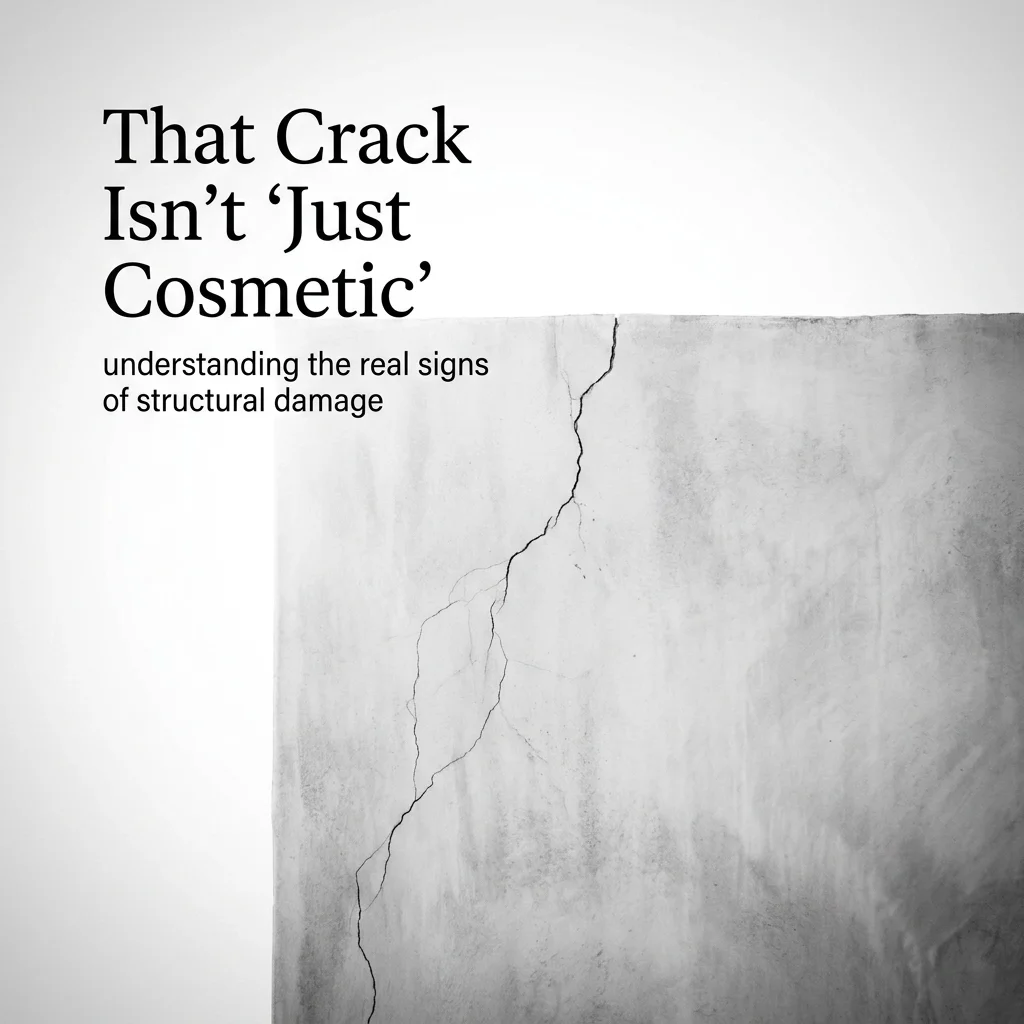
That Crack Isn’t ‘Just Cosmetic’
We’ve all done it. You’re walking through the living room, heading to the kitchen for a snack, and you notice it: a thin, jagged line creeping down the wall. You tell yourself, “Eh, the house is just settling,” or “I’ll just slap some spackle on that next weekend.”
But here’s the truth from your neighbors at Your Handyman Pros: in the Salt Lake Valley, some cracks can point to underlying movement or moisture issues worth paying attention to. Because of our unique Utah climate, with dry summers, heavy snow loads, and clay-heavy soil, even small cracks can sometimes signal larger problems developing behind the surface.
If you’ve been ignoring a blemish on your walls or foundation, let’s talk about why it may be worth taking a closer look.
The Stair-Step Foundation Crack
If you have a brick exterior or unfinished basement in Herriman or Riverton, you may notice cracks that follow the mortar joints in a diagonal, stair-step pattern.
These types of cracks are commonly associated with foundation movement or soil expansion and contraction. In the Salt Lake Valley, clay-heavy soils can shift noticeably as moisture levels change throughout the year. When soil becomes saturated, it expands. During hot, dry stretches, it contracts again.
This repeated expansion and contraction can place stress on foundations over time.
Wider cracks, growing cracks, or visible separation around windows and doors can all be signs that further evaluation may be needed. Catching those issues early may help prevent repairs from becoming significantly more extensive and expensive later on.
Ceiling Seam Separation
Have you noticed a gap forming where the wall meets the ceiling? Or perhaps a long, straight crack running across a hallway ceiling in Sandy or West Valley City?
This is often related to a phenomenon called truss uplift. During colder months, differences in temperature and moisture levels between the top and bottom portions of roof trusses can cause slight seasonal movement.
In many homes, this movement is mostly cosmetic. However, recurring ceiling separation can sometimes also point to attic moisture issues, framing movement, or drywall installation problems.
Over time, gaps around ceilings and trim can contribute to unwanted air leakage and reduced energy efficiency.
The Recurring Drywall Crack
This is the one that frustrates homeowners the most. You patch it, sand it, repaint it… and a few months later, it’s back in the exact same location.
When drywall cracks repeatedly return, it can be a sign that ongoing movement is occurring behind the surface. This commonly happens above doors or near window corners where framing naturally experiences more stress.
As framing shifts or settles, stress can continue to reappear in drywall joints and seams.
If you’re also noticing doors sticking, uneven gaps, or doors swinging open on their own, those issues can sometimes be connected to the same underlying movement.
Why “Wait and See” Can Backfire
In Utah, moisture intrusion can quietly create bigger problems over time. Cracks in foundations, siding, stucco, or exterior joints can allow moisture intrusion during rain or snowmelt events.
Once moisture gets behind walls or beneath flooring, it can contribute to mold growth, wood deterioration, or additional material movement over time.
Catching these issues early can be the difference between a relatively minor repair and a much larger restoration project later.
At Your Handyman Pros, we help homeowners identify visual warning signs before they become major headaches.
We’re Here to Help
Whether you're in Salt Lake City, Sandy, Magna, or Herriman, don’t ignore recurring cracks or signs of movement around your home. We’ve worked on homes all across the Salt Lake Valley, and we understand the unique challenges our climate and soil conditions can create.
We are a licensed and insured contractor, and we take pride in providing reliable, professional service throughout the valley.
If you’d like a professional set of eyes on a crack, gap, or shifting issue in your home, give us a call. We’d be happy to help you figure out what’s cosmetic, what’s normal, and what may need attention.

The Stuff Destroying Your Floors
The Stuff Destroying Your Floors
We’ve all been there. You look down at your beautiful hardwood or that sleek luxury vinyl plank you had installed a few years ago, and suddenly, you notice it: the scratches, the dullness, or that weird bulging at the seams. You wonder, “When did that happen?”
The truth is, most floor damage isn't caused by a single catastrophic event. It’s not usually a dropped bowling ball or a leaked dishwasher (though those certainly don't help). In the Salt Lake Valley, our floors are under a constant, quiet attack from our everyday habits. Between the wild Utah weather and the hustle and bustle of family life in places like Riverton and Sandy, your floors are fighting a losing battle unless you know what to look for.
At Your Handyman Pros, we see the aftermath of these "silent floor killers" every day. Whether you’re dealing with normal wear and tear or warning signs that something bigger is wrong, understanding what’s eating your flooring is the first step to saving your investment.
The Utah Winter Special: Wet Shoes and Road Salt
Living in the Salt Lake Valley means we deal with some serious snow. But it's not just the water that's the problem; it's what's in the water. When you walk from your driveway in Herriman into your entryway, you’re bringing in a cocktail of slush, grit, and: most importantly: road salt (magnesium chloride).
Road salt is incredibly abrasive. Think of it as liquid sandpaper. When it dries on your floor, it leaves behind a white, crystalline residue that gets ground into the finish every time you walk over it. Over time, this strips away the protective layer of your hardwood or laminate, leaving the material underneath vulnerable to moisture.
And speaking of moisture, that melted snow doesn't just sit on top. It finds its way into the tiny gaps between planks. If you have engineered wood or laminate, that water can cause the core to swell, leading to "peaking" where the edges of the boards push upward. By the time you notice the bumps, the damage is usually permanent.
Pro-Tip: A "no shoes" policy is your floor's best friend. If that’s not realistic for your crew, make sure you have high-quality mats both inside and outside every entrance.
The Silent Scratchers: Chair Wheels and Furniture Drag
We do a lot of home office work these days, from Magna to West Valley City. That means a lot of time spent in rolling office chairs. If you’re using a standard plastic-wheeled chair directly on hardwood, tile, or LVP, you are essentially grinding the floor down every time you scoot toward your desk.
Those wheels trap tiny bits of grit and dust underneath them. As you move, the wheels press that grit into the floor with the full weight of your body. Within months, you’ll see a dull "halo" or a patch of scratches where you sit.
It's not just the office, though. Think about your dining room. How often do people slide their chairs back to stand up? Every time that chair leg drags across the floor without a felt pad, it’s taking a microscopic (or sometimes very visible) layer of finish with it. Over years, this turns into deep gouges that require professional sanding and refinishing.
If you’re seeing subtle warning signs of bigger home problems, floor degradation under furniture is often one of the first things we notice during a home inspection.
The Splash Zone: Pet Water Bowls and Soaking Seams
We love our pets, but they are undeniably hard on floors. Most people worry about untrimmed claws: which are a major issue: but the bigger, more hidden threat is the "Splash Zone."
Most pet owners keep a water bowl in the kitchen or laundry room. Dogs, in particular, aren't exactly delicate drinkers. They lap up water, and half of it ends up on the floor. If you have a "sloppy drinker," that water sits on the floor seams for hours while you’re at work.
In West Valley City and Sandy homes, we’ve replaced countless square feet of flooring specifically around pet stations. The water seeps into the tongue-and-groove joints, causing the subfloor to dampen and the planks to warp. This is how you end up with visual home warning signs like dark staining or mold growth under the floorboards.
The Fix: Place a waterproof silicone mat with a raised lip under all pet food and water bowls. It’s a $15 fix that can save you a $5,000 floor replacement.
The Sandpaper Effect: Neglecting the Dust
It sounds simple, but dust is one of the most destructive forces in your home. In the Salt Lake Valley, our wind brings in a lot of fine, silty dust from the surrounding foothills. When this dust settles on your floor, it acts as an abrasive. Every time you walk across a dusty floor, you are effectively sanding it with your socks or shoes.
This is why high-traffic areas like hallways and kitchens always look duller than the corners of the room. Regular sweeping is good, but a microfiber dust mop is better for picking up those tiny particles that act like sandpaper.
If your floors have already lost their luster and you’re looking to freshen up your space, sometimes a bigger project is the answer. Check out our home comfort improvement projects for ideas on how to revitalize your living areas.
When Habits Turn Into Repairs
Sometimes, despite our best efforts, the damage is done. Maybe the road salt has already pitted the entryway, or the pet bowl has caused a soft spot in the kitchen floor. When these minor home issues turn into major repairs, it's time to call in the pros.
At Your Handyman Pros, we specialize in helping homeowners across the Salt Lake Valley: from the new builds in Herriman to the classic homes in Magna: keep their properties in top shape. Whether it’s replacing a few damaged planks, installing new transition strips, or a full-blown flooring overhaul, we’ve got you covered.
Don't let small habits destroy your home's value. A little bit of prevention goes a long way, but when you need a hand, we’re just a call away.
We are a licensed and insured contractor, and our team is dedicated to providing the highest quality service in the valley.

That Smell Isn’t Normal
That Smell Isn’t Normal
We’ve all been there. You walk into the laundry room or step down into the basement and catch a whiff of something… funky. You check the bottom of your shoes. You sniff the dog. You even double-check that the teenager didn't leave a half-eaten sandwich behind the sofa. But when the "cleaning the house" routine doesn't get rid of the odor, it’s time to face the facts: your house is trying to tell you something.
In the Salt Lake Valley, our homes go through a lot, from dry summer heat to heavy winter snowmelt. Those changing conditions can trigger some pretty specific (and pretty gross) smells. At Your Handyman Pros, we’ve seen, and smelled, it all. Usually, a weird odor is a subtle warning sign of a bigger home problem.
Here are three common "house smells" that definitely aren't normal and what they could mean for your home.
1. The Musty "Old Basement" Smell Near Baseboards
If you’re walking through your finished basement in Herriman or your living room in Riverton and notice a damp, earthy, or musty odor, don't just light a candle and hope for the best. If that smell is concentrated near the baseboards, you’re likely dealing with a moisture issue.
Musty smells are often associated with excess moisture, mold, or mildew growth. Mold doesn't just happen in the shower; it also thrives in dark, tight spaces behind trim and drywall. Common causes include:
A slow pipe leak: A tiny pinhole leak in the wall can keep the backside of your drywall damp for months without you ever seeing a puddle.
Foundation seepage: After a heavy Utah rain, water can press against your foundation and seep in behind the baseboards.
Poor ventilation: In humid areas like laundry rooms or bathrooms, stagnant air traps moisture.
Ignoring moisture issues can allow minor problems to turn into major repairs. If the drywall feels soft or you see dark spotting, you may already have water damage or mold growth behind the surface.
2. The Smell of "Hot Plastic" or Fish
This is the one that should make you stop and pay attention. If you catch a scent that reminds you of burning plastic, melting rubber, or, strangely enough, rotten fish, you may have an electrical issue.
When electrical components like wires, outlets, or breakers overheat, the plastic insulation can begin to melt or off-gas. This creates a distinct chemical-like odor. It’s a serious warning sign that electrical components may be overheating and should be inspected promptly. This can be especially common in older homes in Sandy or West Valley City where the wiring may be struggling to keep up with modern appliance demands.
You might notice the smell near a specific outlet or breaker panel. If you notice heat, discoloration, buzzing, or a burning smell from an outlet or panel, turn off power to the affected area if it’s safe to do so and contact a licensed electrician.
3. The "Stale Sewer" Funk
Few things are as unpleasant as walking into your Magna kitchen or a guest bathroom in Salt Lake City and being greeted by the smell of sewer gas. Before assuming there’s a major sewer line issue, it may be something much simpler: a dry trap.
Your plumbing fixtures have P-traps, those U-shaped pipes underneath sinks and drains. They are designed to hold a small amount of water at all times, creating a seal that helps block sewer gases from entering your home.
If you have a guest bathroom or floor drain that hasn't been used in a while, the water in that trap can evaporate. Without that water seal, odors can drift back into the home. The fix is often simple: run the water for a minute or pour water down the floor drain.
However, if the smell persists even after running water, you may have a blocked vent stack on your roof. These vents help regulate airflow in your plumbing system. If they become blocked by debris or nests, drainage and odor issues can develop inside the home.
Understanding what unusual odors can indicate may help you catch small issues before they become expensive repairs.
Don't Let Your House Stink You Out
Your nose is one of your best home maintenance tools. If something smells "off," it’s because something may be off. Whether it’s a slow leak behind a baseboard or an overheating electrical component, catching issues early is one of the best ways to keep your Salt Lake Valley home safe and comfortable.
At Your Handyman Pros, we help homeowners track down the source of strange odors, moisture problems, and minor repair issues before they turn into larger headaches. Whether it’s drywall repair, ventilation improvements, or identifying signs of hidden water damage, we’re here to help. We are a licensed and insured contractor, and we take pride in helping our neighbors in Herriman, Riverton, Sandy, and beyond.
If your house is giving you a "stinky" attitude, give us a call. We’ll help you clear the air.
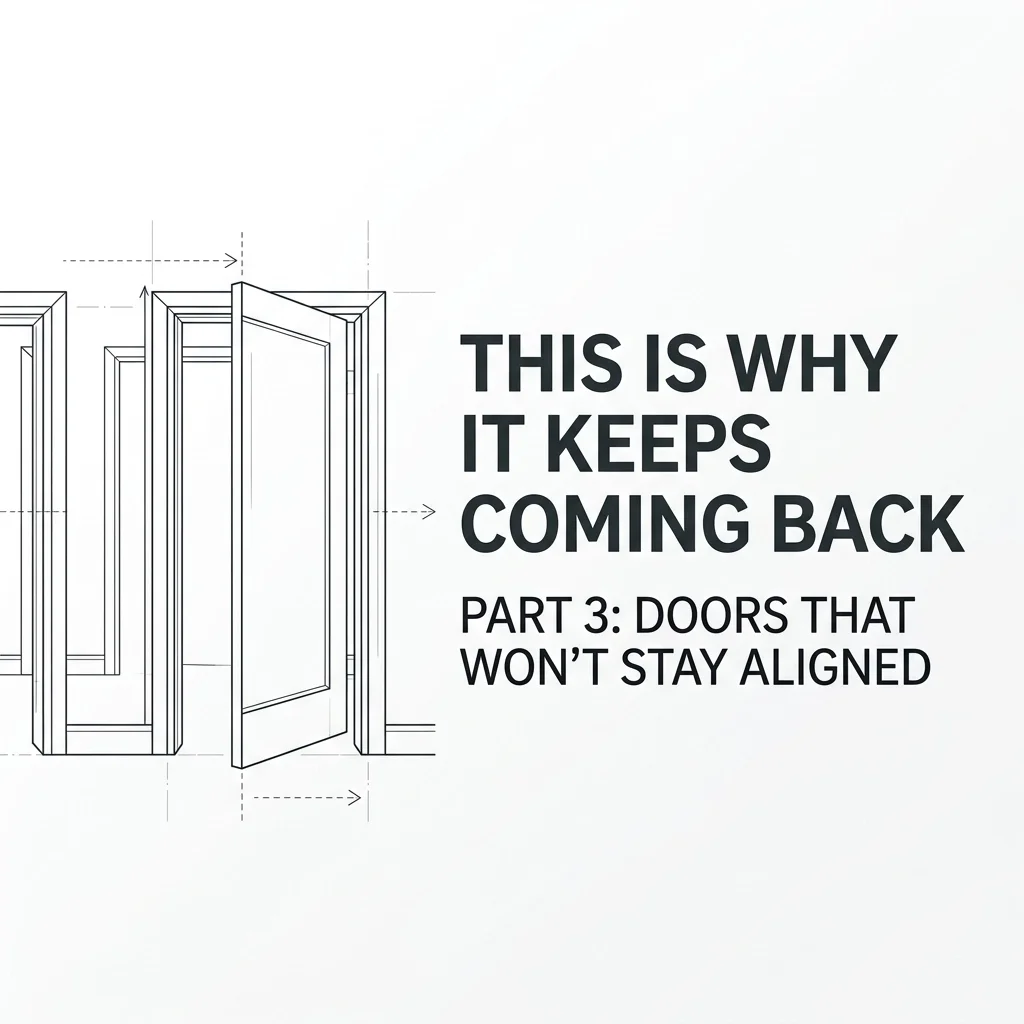
This Is Why It Keeps Coming Back Part 3: Doors That Won’t Stay Aligned
This Is Why It Keeps Coming Back Part 3: Doors That Won’t Stay Aligned
You know the feeling. You spent your Saturday morning with a screwdriver, a level, and maybe a little bit of colorful language, finally getting that bedroom door to close without a fight. You felt like the king of home maintenance. But then, two weeks later, you’re walking down the hallway in your Herriman home and, thump, the door catches on the frame again. Or worse, it starts drifting open on its own like a scene from a low-budget horror movie.
Some homeowners end up in a situation where they think they’ve fixed the problem, but they’ve really just put a Band-Aid on a broken leg. If your door won’t stay aligned, it’s usually because the underlying cause is still lurking in the shadows.
This is Part 3 of our series "This Is Why It Keeps Coming Back," and today, we’re talking about the frustrating saga of the door that just won't stay put.
1. The Frame is Shifting, Not the Door
In many cases, the door itself is perfectly fine. The issue is often that the frame or surrounding structure has shifted slightly over time. Here in the Salt Lake Valley, seasonal movement, settling, and humidity changes can all contribute to alignment issues.
If you live in a newer build in Riverton or West Valley City, some degree of settling is normal as materials gradually adjust over time. Even relatively small shifts can affect how smoothly a door opens, closes, or latches.
Then there’s the Utah climate. Wood naturally expands and contracts as humidity levels change. During wetter periods, frames and doors may swell slightly, while dry winter air can cause shrinkage and gaps. If you sand or adjust a door during one season, the fit may change again later in the year.
Adjusting the hinges can help temporarily, but if the frame itself is moving or out of alignment, the issue may continue returning until the underlying cause is addressed.
2. Screws are Loose or Stripped (The "Shorty" Problem)
This is one of the most common causes of recurring door issues in Sandy and Magna. Over time, hinge screws can loosen or lose their grip in the wood, especially on heavier doors that see constant use.
Every time a door opens and closes, stress is placed on the hinges and fasteners. As the screw holes wear out, the door may begin to sag slightly. That sag is what often causes scraping, sticking, or latch alignment problems.
If the stripped wood or weak attachment point isn’t addressed, repeatedly tightening the screws usually becomes a temporary fix.
One common repair approach is replacing a shorter hinge screw with a longer screw that anchors more securely into the framing behind the jamb. However, the best repair method depends on the condition of the door, frame, and surrounding materials.
3. The Fix Didn’t Address the Stress Point
Some homeowners come up with some creatively detrimental DIY fixes. Shims, bent hinge pins, improvised spacers, you name it. While some of these methods can help temporarily, they don’t always address the actual cause of the stress on the door system.
For example, if a heavy door is pulling unevenly on worn hardware, adjusting only one hinge may simply shift the problem somewhere else. The alignment may improve briefly, but the underlying stress remains.
Think of it like a wheel alignment on your truck. If one part of the system is still off, the problem tends to return. When we handle doors that won’t close properly for our clients, we look at the entire system: the hinges, jamb, floor clearance, strike plate, and overall frame alignment.
Why Pro Help Makes the Difference
A door that won’t stay aligned is more than just an annoyance. Sometimes it’s normal wear and tear, and other times it can point to larger alignment or settling issues within the home.
At Your Handyman Pros, our team focuses on diagnosing the cause of the issue, not just the symptom. We don’t just tighten a screw and call it a day; we work to make sure the repair actually lasts. We serve the entire Salt Lake Valley, from the hills of Sandy to the quiet streets of Magna.
Stop fighting with your house! Let us handle the heavy lifting and the precision adjustments. We are a licensed and insured contractor, and we take pride in doing the job right so it doesn't "keep coming back."
Whether you need help with doors, curb appeal boosters, or a full bathroom remodel, we’ve got your back.

This Is Why It Keeps Coming Back Part 2: Peeling Paint in Bathrooms
This Is Why It Keeps Coming Back Part 2: Peeling Paint in Bathrooms
You’ve seen it. That little curl of paint near the ceiling. You scrape it, you slap some leftover paint from the garage on it, and you walk away feeling like a DIY champion. Then, three months later, it’s back, hanging there like a piece of sunburned skin, mocking your hard work.
In the Salt Lake Valley, we see this all the time. Whether you’re in a historic bungalow in Magna or a newer build in Herriman, bathroom paint failure is the "Groundhog Day" of home maintenance. At Your Handyman Pros, we’re all about stopping the cycle.
Here is exactly why that bathroom paint keeps peeling and how to actually fix it for good.
1. Moisture Is Breaking the Bond (The "Steam Sabotage")
Think of your bathroom as a miniature rainforest. Every time you take a hot shower, steam fills the room. If that steam has nowhere to go, it doesn't just sit on the surface, it settles onto walls, ceilings, and cooler surfaces throughout the room.
Paint creates a protective layer over your drywall. When moisture penetrates small cracks, gaps in caulk, or poorly sealed surfaces, it can weaken the bond between the paint and the wall underneath. Over time, repeated exposure to steam and humidity can cause the paint to bubble, crack, or peel away. This is especially common in West Valley City homes where older exhaust fans might not be pulling their weight anymore.
If your fan isn't clearing the mirror within several minutes of your shower ending, there’s a good chance your ventilation isn’t moving enough moisture out of the room. Without improving the airflow, repainting alone usually won’t solve the problem for long.
2. You’re Using the Wrong Materials
We get it: paint is expensive. It’s tempting to use that "All-Purpose Interior Flat" you used for the guest bedroom. But bathrooms are high-moisture environments that put a lot more stress on paint and drywall than other rooms in the house.
Using standard interior paint in a bathroom often leads to premature wear, especially if the surface isn't designed to handle repeated humidity and cleaning. In many cases, a more moisture-resistant paint and the correct finish for the space will hold up much better over time.
More importantly, many homeowners in Sandy and Riverton skip the primer. Not just any primer, either, you need a high-quality primer designed to improve adhesion and help seal the surface underneath. If you’re seeing peeling paint and hidden home damage, it’s often because the paint never bonded properly to begin with.
3. The "Quick Fix" Mentality: Prep Work Was Skipped
We know, we know. Nobody likes sanding. But if you’re painting over a glossy surface without scuffing it up first, that new layer of paint is basically just resting on the wall, waiting for a reason to fall off.
Even worse? Painting over damp walls. In our rush to get the job done, we sometimes paint before the room has fully dried out. If moisture is trapped behind the paint layer, it can contribute to peeling and bubbling later on.
In places like Magna and Salt Lake City, where we deal with both humid stretches and dry winters, seasonal expansion and contraction can make poorly bonded paint fail even faster. Proper prep, cleaning residue, sanding glossy surfaces, repairing damaged areas, and making sure everything is fully dry, is a huge part of getting long-lasting results.
Breaking the Cycle
If you’re tired of the "scrape-paint-repeat" routine, it might be time to bring in a pro who understands the specific needs of Salt Lake Valley homes. Sometimes peeling paint is just surface wear. Other times, it’s a warning sign that excess moisture or ventilation problems need to be addressed first.
At Your Handyman Pros, we don’t just cover up problems; we solve them. We are a licensed and insured contractor, and we've helped plenty of your neighbors in Herriman and Riverton turn their frustrating bathrooms back into comfortable, functional spaces.
Check out our other pro tips and projects to see how we can help you tackle those nagging home issues once and for all.
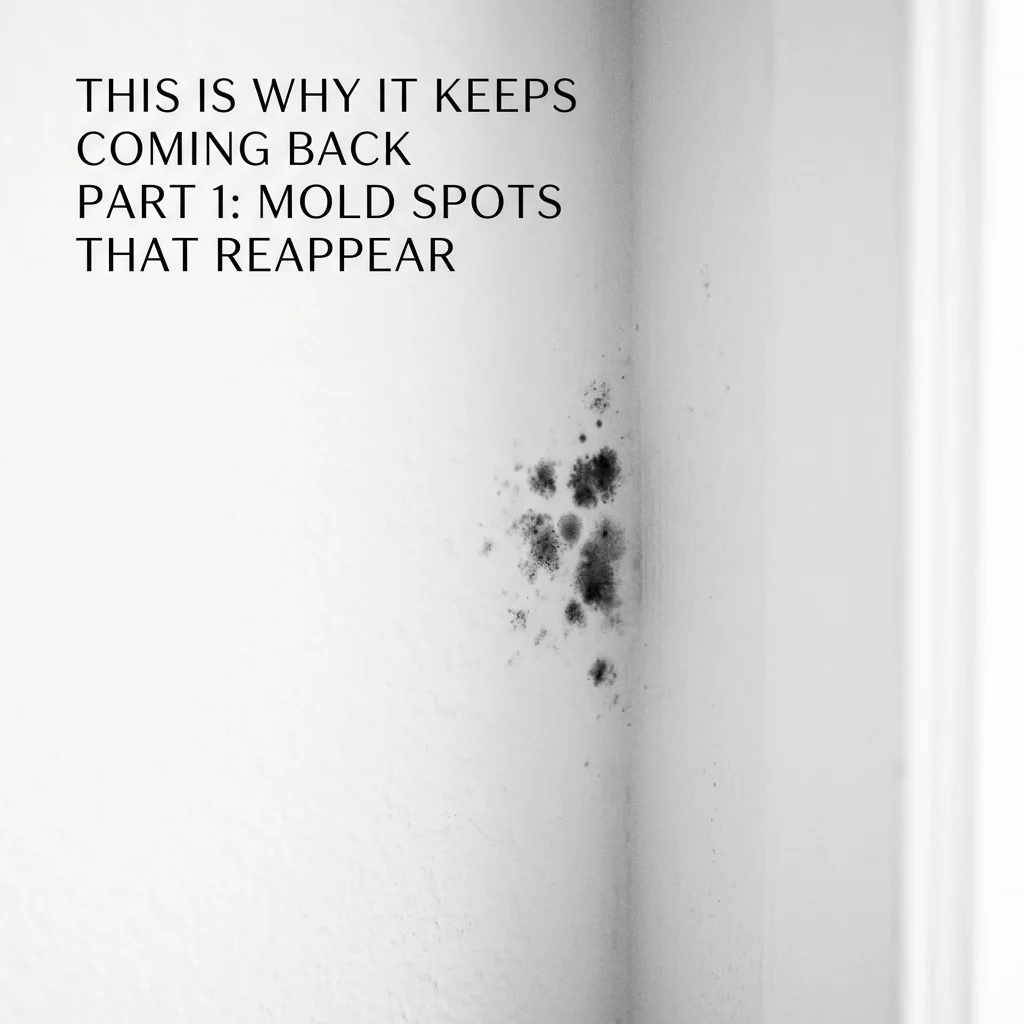
“This Is Why It Keeps Coming Back” Part 1: Mold Spots That Reappear
"This Is Why It Keeps Coming Back" Part 1: Mold Spots That Reappear
Hey there, Salt Lake Valley
Have you ever had that one mold spot in your bathroom, maybe it’s in the corner of the ceiling or tucked behind the toilet, that feels like it’s haunting you? You scrub it with bleach, you give it the side-eye for a few weeks, and then, like a villain in a low-budget horror movie, it slowly starts to reappear.
It’s frustrating, right? You’re doing the work, but the results just won’t stick. You start questioning your cleaning supplies, your sanity, and whether or not the house is cursed. Well, I’ve got good news and bad news. The good news: your house isn’t haunted. The bad news: you’ve probably only been treating the symptom, not the actual disease.
In this first part of our "This Is Why It Keeps Coming Back" series, we’re diving into the fuzzy, frustrating world of recurring mold. If you’re living in Sandy, Herriman, or anywhere across the Salt Lake Valley, here is why those spots just won’t stay gone.
1. The Moisture Problem Was Never Solved
Mold is a type of fungus that thrives on moisture. It needs food and water to survive. In your home, the "food" is usually the organic material in your drywall, wood, or even the dust on your walls. We can’t exactly remove the walls of your house, so the biggest variable we can control is the water.
If you have a mold spot that keeps coming back, it’s because the moisture source is still there. You can scrub until your arm falls off, but if that bathroom fan isn’t moving enough air, or if there’s a pinhole leak in the wall, the mold is just waiting for you to put the sponge away so it can get back to business.
One of the biggest culprits is an underperforming bathroom exhaust fan. If your mirror is still foggy ten minutes after your shower, there's a good chance your fan isn't doing its job. That lingering steam settles on the walls and ceiling, creating ideal conditions for mold growth.
Sometimes the moisture isn't obvious, and your home might be the victim of a slow, silent leak. It’s not a puddle on the floor; it’s a tiny, rhythmic drip inside the wall from a supply line or a poorly sealed window. If you suspect a deeper issue, checking out our visual home warning signs can help you spot the clues before they turn into a major renovation project.
2. You Cleaned the Surface, Not the Source
This is the "iceberg" problem. When you see a black or green spot on your drywall, you’re only seeing the fruiting body of the mold. The actual "roots," called hyphae, can penetrate deep into porous materials like drywall, grout, and wood.
Most homeowners reach for the bleach. While bleach is great for hard, non-porous surfaces like your tile or tub, it actually struggles with porous materials like drywall. It often cleans the surface without reaching the deeper growth, which allows mold to return.
If the mold has truly rooted itself into the drywall, there are many cases where the only reliable way to stop it from coming back is to remove and replace the affected material. Wiping it down is just hitting the "reset" button on a timer. Eventually, those deep-seated roots will push back to the surface. This is a classic case of minor home issues turning into major repairs.
3. Airflow Is Working Against You
Sometimes, you don’t have a leak, and your fan works fine, but you still get mold in specific spots. Why? Because of "dead zones."
In every home, there are areas where air simply doesn’t move. Think about the space behind a massive double-sink vanity in a Sandy master bath or the tight corner behind a linen cabinet in Magna. When air stagnates, it traps moisture against the wall.
A common spot for mold growth is the wall behind bathroom vanities. Because the vanity is pushed flush against the wall, there’s no airflow to dry out any humidity that sneaks back there. If your bathroom doesn't have a consistent temperature or airflow pattern, these spots become the perfect breeding ground.
Improving the "breathability" of your home is key. Sometimes that means upgrading to a more powerful ventilation system or simply ensuring that furniture isn't pressed tight against cold exterior walls. If you’re curious about how to make these spaces more functional and healthier, take a look at our home comfort improvement projects.
Breaking the Cycle in the Salt Lake Valley
Living in the Salt Lake Valley, we deal with some unique climate shifts. Our summers are bone-dry, but our winters and springs can bring a lot of moisture into the home. When you combine that with the way we seal up our houses for energy efficiency, we often end up trapping moisture inside.
If you’re tired of seeing the same spots return, it’s time to stop scrubbing and start investigating.
At Your Handyman Pros, we don't just "paint over" the problem. We want to help you find out why it’s happening so you can move on with your life. Whether you're in Sandy or West Valley City, we’re here to help you get your home back in tip-top shape.
Let’s Fix It for Good
Recurring mold isn't just an eyesore; it's a sign that your home's systems are out of balance. Don't let a small spot lead to a huge headache down the road.
If you're ready to stop the cycle of scrubbing and finally address the source of your home's issues, give us a shout. We are a licensed and insured contractor, and our team is ready to help you with everything from drywall repair to ventilation upgrades.
Stay tuned for Part 2 of this series, where we’ll talk about another common headache: peeling paint in the bathroom!
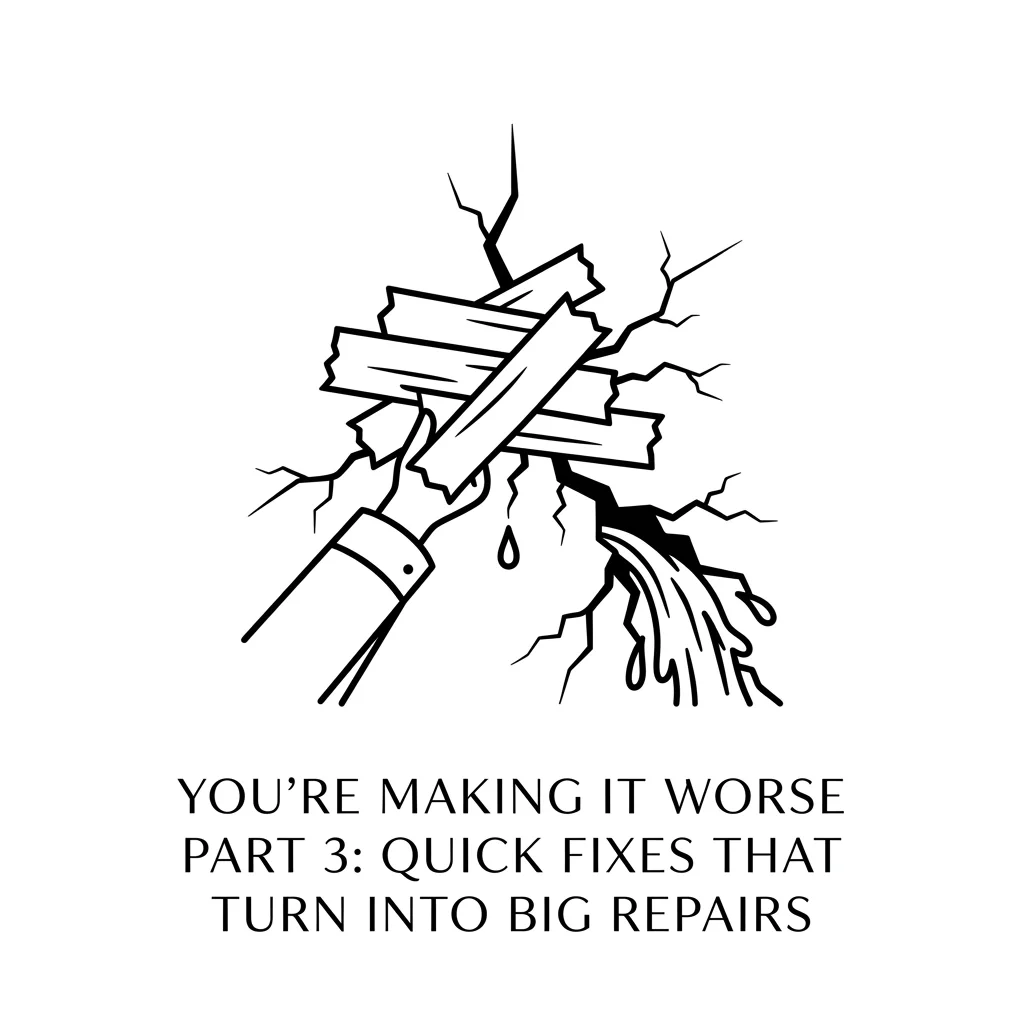
You're Making It Worse Part 3: Quick Fixes That Turn Into Big Repairs
You're Making It Worse Part 3: Quick Fixes That Turn Into Big Repairs
Hey there, Salt Lake Valley homeowners! We are back with the third and final installment of our "You're Making It Worse" series. If you’ve been following along, you know we’ve already covered how "quick" DIY plumbing and electrical fixes can actually lead to larger and more expensive issues over time.
Today, we’re talking about those "I’ll just patch this up real quick" projects that seem harmless on a Saturday morning but end up costing you a fortune by next season.
Your Handyman Pros loves a DIY spirit, but there’s a big difference between maintaining your home and accidentally sabotaging it. Let’s dive into the three most common "quick fixes" that turn into major repairs.
1. The "No-Anchor" Drywall Disaster
We get it. You just bought a beautiful new floating shelf or a heavy mirror, and you want it on the wall now. You find a spot, grab a screw, and drive it straight into the drywall. It feels solid enough, right?
Wrong.
Drywall is essentially just gypsum (soft, chalky material) with a paper facing. It has very limited holding strength on its own when it comes to holding weight via a standard screw thread. When you screw directly into drywall without a stud or a proper anchor, the weight of the item slowly pulls the screw downward. This creates a "keyhole" effect, where the hole elongates and the gypsum inside turns to dust.
Why it turns into a big repair:
Eventually, that shelf or mirror screwed straight into the drywall is going to come down. When it does, it doesn’t just fall; it usually takes a huge chunk of the drywall face with it. What could have been a 5-cent plastic anchor and a two-minute installation suddenly turns into a multi-step drywall repair project. Now you’re patching, sanding, texturing (which is an art form in itself), and repainting the entire wall because matching older paint can be incredibly difficult.
If you aren't sure if your wall can handle the weight, check out some of our visual home warning signs to see if your drywall is already under stress.
2. Covering Cracks Instead of Addressing Movement
In the Salt Lake Valley, our soil loves to move. From the benches of Sandy to the flatter lots in West Valley City, the ground shifts as it freezes and thaws. This often leads to small cracks in your drywall or exterior stucco.
The "quick fix" most people reach for is a tub of spackle or a tube of caulk. You fill the crack, paint over it, and tell yourself the problem is solved. But in reality, cracks are a symptom, not the disease. If you have a crack that keeps reappearing in the same spot, your house is trying to tell you something about minor home issues that lead to major repairs.
Why it turns into a big repair:
By simply covering the crack, you’re ignoring the underlying movement. In some cases, it may point to settling or foundation-related movement, and that "quick patch" is hiding the evidence while the damage gets worse. Over time, that tiny hairline crack can turn into a door that won't close, a window that won't budge, or, in more serious cases, larger structural concerns.
If you notice doors sticking, that's often the next stage of this problem. You can learn more about why doors won’t close and what it says about your home’s health on our blog. Addressing the root cause, whether it’s drainage, foundation stabilization, or proper structural reinforcement, is much cheaper than rebuilding a wall later.
3. Using the Wrong Materials for Outdoor Repairs
Utah weather is brutal. We have intense UV rays at this altitude, followed by freezing winters and spring rain. When a piece of trim on your porch starts to rot or a deck board looks rough, many homeowners grab whatever "wood filler" or leftover interior paint they have in the garage.
Using interior-grade materials or the wrong type of sealant for outdoor repairs can lead to premature failure. Interior paint doesn't have the UV inhibitors needed to survive the Magna sun. Standard wood filler isn't flexible enough to handle the expansion and contraction caused by large temperature swings throughout the day.
Why it turns into a big repair:
Within a few months, the "fix" will fail. Water will get trapped behind the failing material, potentially leading to accelerated rot that can extend into surrounding materials of your home. In some cases, this kind of failure can lead to major repairs like replacing sections of porch structure.
For those looking to boost their home's longevity, sticking to high-quality, weather-rated materials is non-negotiable. If you're planning some weekend work, take a look at our guide on home protection weekend projects to make sure you're using the right stuff.
The Professional Advantage in Salt Lake Valley
At Your Handyman Pros, we know these "quick fix" consequences can turn what should have been a simple DIY project and into a major headache down the line. We know it’s tempting to save a few bucks and ten minutes of time, but your home is likely your biggest investment. Treating it with the right materials and techniques pays off in the long run.
Whether you are in Riverton, Sandy, or anywhere else in the Salt Lake Valley, we are here to help you get the job done right the first time. We handle everything from the small "to-do" list items to full-scale general contracting. And remember, we are a licensed and insured professional, so you can rest easy knowing your home is in good hands.
If you’ve realized that a "quick fix" has started to turn into a headache, don't wait until it gets worse. Check out our pro tips and projects page for more advice, or give us a call to schedule a visit.
Let's keep your home beautiful, safe, and structurally sound without the shortcuts!

You're Making It Worse Part 2: Electrical Shortcuts That Aren’t Worth It
You're Making It Worse Part 2: Electrical Shortcuts That Aren’t Worth It
Hey there, Salt Lake Valley homeowners!
We’re back with Part 2 of our “You’re Making It Worse” series. If you missed Part 1, we dove deep into how DIY plumbing “fixes” can actually turn a small leak into a structural nightmare. Today, we’re shifting gears to something more invisible and potentially more dangerous: Electrical.
We get it. When you’re living in a beautiful home in Herriman or a classic property in Sandy, you want things to work. When a light won’t turn on or you need power in a corner that doesn't have an outlet, the "quick fix" is tempting. But with electricity, a shortcut isn't just a mistake: it’s a potential shock or fire hazard.
Here are three common electrical shortcuts that are actually making your home less safe.
1. The "Permanent" Extension Cord
We’ve all been there. You bought a new treadmill for your home gym in Riverton, or you’re setting up a home office in Magna, and the nearest outlet is six feet away. You grab an extension cord, tuck it under a rug or staple it along the baseboard, and call it a day.
Why it’s making it worse: Extension cords are usually designed for temporary use. Many extension cords aren’t designed to handle continuous loads or higher-draw appliances over long periods of time. Prolonged use can cause the insulation to degrade, especially if it’s pinched under furniture or walked on. This can lead to overheating and increased fire risk, especially if the cord is damaged or overloaded. Plus, running cords under rugs or through walls can trap heat and damage insulation, which significantly increases fire risk.
If you need power somewhere permanently, the only safe answer is to have a pro install a new outlet. It’s a weekend efficiency upgrade that actually adds value to your home rather than adding risk.
2. Swapping Fixtures Without Checking Compatibility
Updating your lighting is one of the fastest ways to modernize a room. Maybe you’re ditching those "outdated lighting" flush mount fixtures for something more modern in your West Valley City kitchen. It seems like a simple "black to black, white to white" job, right?
Why it’s making it worse: Not all wiring is created equal. If you’re putting a high-wattage fixture on old wiring, or if you aren't ensuring a tight, secure connection with the right wire nuts, you’re asking for trouble. Loose connections create resistance, and resistance creates heat. That heat can damage wire insulation, sometimes before a breaker trips.
Before you swap a fixture, you need to ensure the you need to ensure the electrical box is properly rated and secured for the fixture’s weight, and verify that the wiring is rated for the load. If you're seeing visual warning signs like flickering or scorched plastic, stop immediately.
3. The "Reset and Forget" Breaker Strategy
Your breaker trips. You go to the garage, flip the switch back to "On," and go about your day. It happens again an hour later. You flip it back again.
Why it’s making it worse: A breaker trips for a reason. It is a safety device designed to shut off power when it detects an overload, a short circuit, or a ground fault. By repeatedly resetting it without diagnosing the cause, you may be allowing a fault condition to continue.
Ignoring a tripping breaker is one of those ignored home maintenance issues that can increase the risk of electrical failure or a fire behind your walls. If a breaker trips more than once, it’s time to find out why.
Why Proper Knowledge Matters
At Your Handyman Pros, we love a good DIY project as much as anyone, but electrical work is where we urge Salt Lake Valley residents to be extra cautious. Whether you are in Sandy or West Valley City, your home's safety depends on systems that meet code and are installed correctly.
Don't let a "quick fix" turn into a call to the fire department. If you’re unsure about a project, give us a shout. We are a licensed and insured contractor, and we’re here to help keep your home running safely and efficiently.
Stay tuned for Part 3, where we'll talk about those "quick" structural and cosmetic fixes that end up costing you thousands in the long run!
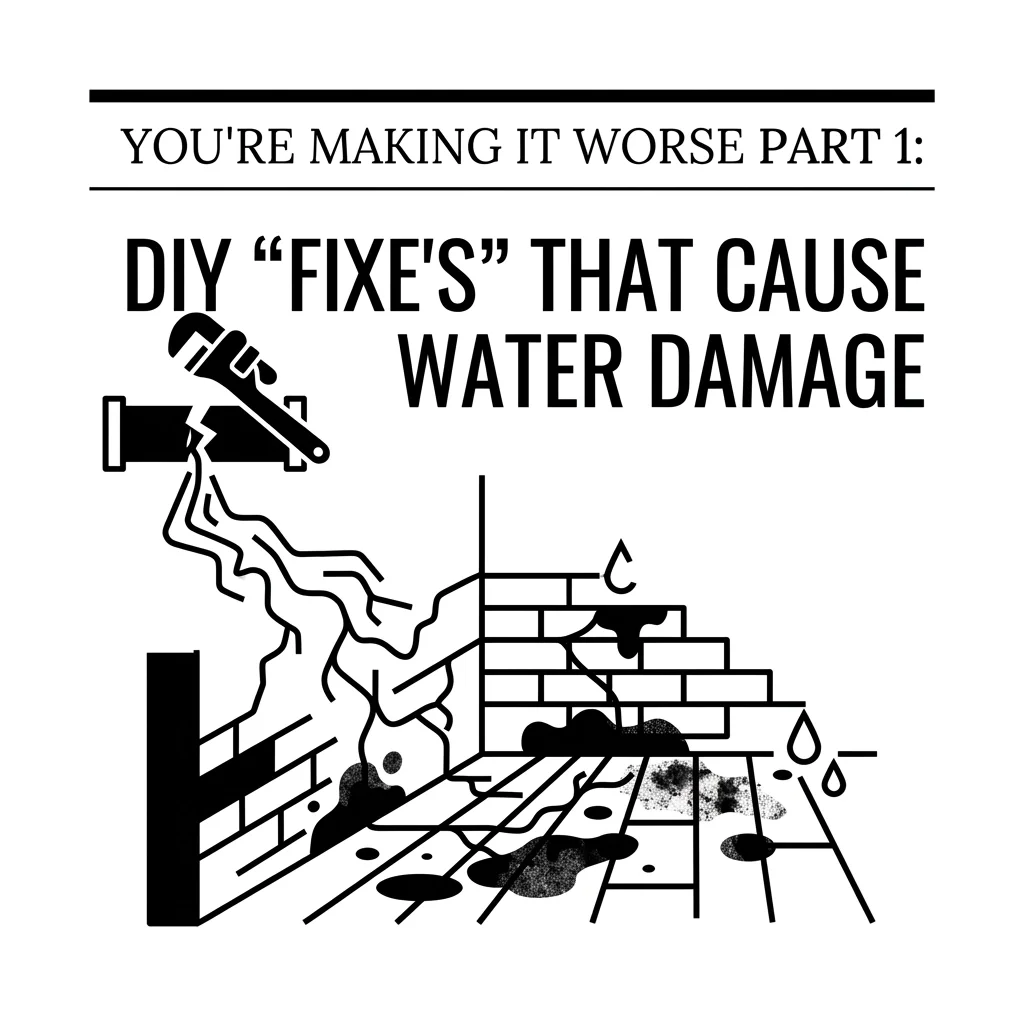
You're Making It Worse Part 1: DIY “Fixes” That Cause Water Damage
You're Making It Worse Part 1: DIY “Fixes” That Cause Water Damage
Hey there, Salt Lake Valley neighbors!
We’ve all been there. You’re walking through the house in Herriman or Riverton, and you spot it: a little gap in the shower caulk, a tiny drip under the sink, or a faint yellow circle on the ceiling. Your first instinct? “I can handle this. I’ll just run to the hardware store, grab some silicone or a patch kit, and be done before kickoff.”
We love the DIY spirit. It’s what built this valley. But to be honest, when it comes to water, your “quick fix” might actually be a ticking time bomb. Water is the ultimate home-wrecker. It’s patient, it’s persistent, and it loves to hide.
Welcome to Part 1 of our new series, "You're Making It Worse." Today, we’re talking about the three most common DIY water damage "fixes" that end up costing homeowners in Sandy, Magna, and West Valley City thousands of dollars in the long run.
1. The Seal of Doom: Caulking Over Gaps Without Drying
It’s the most common "fix" in the book. You notice a gap between your bathtub and the tile, or maybe the kitchen backsplash is pulling away. You think, “I’ll just put a fresh bead of caulk over that and seal it up.”
Stop right there.
If there is a gap, water has likely already found its way inside. If you apply a fresh layer of caulk over a damp area, you aren't fixing the leak; you’re building a greenhouse for mold. By sealing that gap without ensuring the substrate (the wood or drywall behind the tile) is 100% dry, you are trapping moisture in a dark, warm environment.
According to industry research, mold can begin developing within 24 to 48 hours when moisture and the right conditions are present. When you "seal" it in, that moisture has nowhere to evaporate. It sits there, soaking into your wall studs and floor joists. What started as a $15 tube of caulk fix can quickly turn into a full-scale bathroom teardown because the wood behind the surface may be softened, damaged, or beginning to rot.
Before you reach for the caulk gun, you need to identify the source and let the area dry completely: sometimes for days with a professional-grade fan. If you’re seeing subtle warning signs of bigger home problems, don't just cover them up.
2. The Band-Aid Trap: Temporary Pipe Patches
We’ve seen the commercials for the "miracle tapes" that can stop a gushing pipe in seconds. While those products are great for an emergency five-minute fix while you wait for a contractor to arrive, they are not permanent solutions.
In many Salt Lake Valley homes, especially the older ones in areas like Magna or West Valley City, pipes eventually corrode. When you see a pinhole leak, it’s usually a symptom of a much larger issue inside the pipe. Using a clamp or waterproof tape might stop the visible drip, but it may hide the leak, fail later, or allow moisture to keep escaping where you can’t easily see it.
These temporary patches often turn an "obvious" problem, one you can see and clean up, into a "slow, destructive" one. The patch might hold for a month, but it starts weeping just enough to soak the insulation inside your wall. By the time you notice the smell or the warped baseboards, the damage is ten times worse than if you had just replaced the section of pipe immediately.
If you're dealing with minor home issues that could lead to major repairs, it’s always better to do it right the first time. A professional touch ensures the structural integrity of your plumbing remains intact.
3. The Cover-Up: Painting Over Water Stains
Picture this: You have a guest coming over to your Sandy home, and you notice a brown water stain on the living room ceiling. You grab a can of "stain-blocking" primer and a roller, and five minutes later, it looks brand new. Problem solved, right?
Wrong.
A water stain is a smoke signal. It’s your house telling you that something is wrong above it, like a leaky roof, a sweating HVAC line, or a bathroom pipe. Painting over the stain is like putting a piece of tape over your car’s "Check Engine" light. It might make you feel better, but the engine is still failing.
When you hide the issue instead of stopping the leak, the water continues to saturate the drywall. Eventually, the drywall loses its structural integrity. In serious cases, saturated drywall can sag, crumble, or even fail if a homeowner keeps painting over a stain until the drywall became too heavy with water to hold its own weight.
Furthermore, peeling paint can be a hidden sign of home damage. If you see bubbling or flaking, it’s a clear indicator that moisture is pushing through from the back. Don't ignore what your house is trying to tell you!
Why "Good Enough" Isn't Good Enough in the Salt Lake Valley
Here in the Salt Lake Valley, we deal with some unique climate challenges. From our bone-dry summers to our heavy, wet snowfalls, our homes go through a lot of expansion and contraction. This movement makes "quick fixes" fail even faster.
When you hire a pro like Your Handyman Pros, we don't just look at the surface. we look at the "why."
Why did that caulk fail?
Why is that pipe corroding?
Where is that ceiling moisture actually coming from?
We handle everything from home protection weekend projects to complete renovations. We are a licensed and insured contractor, which means you get the peace of mind that the job is handled properly, with code requirements and long-term durability in mind.
The Bottom Line
DIY is great for painting a front door or hanging a picture frame. But when it comes to water, the stakes are just too high. Don't let a $20 "fix" turn into a $20,000 restoration project. If you spot a leak, a stain, or a gap, give us a call. We’d much rather help you fix a small problem today than a disaster tomorrow.
Stay tuned for Part 2 of our series, where we’ll talk about the electrical shortcuts that are definitely not worth the risk!

Weekend Projects That Actually Matter Part 3: Comfort Improvements
Weekend Projects That Actually Matter Part 3: Comfort Improvements
Hey, neighbors! It's Your Handyman Pros, here with even more handyman tips.
Here's one: Skip the Pinterest stuff. You know what we mean. Projects that involve three cans of spray paint and a glue gun but don’t actually make your life better. We’re in the thick of spring here in the Salt Lake Valley, and if you’re like most of our neighbors in Herriman or Riverton, you want a home that actually feels good to live in.
Welcome to Part 3 of our “Weekend Projects That Actually Matter” series. We’ve covered efficiency and protection. Today, we’re focusing on comfort. These are the small upgrades that keep you from reaching for a sweater in the living room or squinting under a harsh overhead light.
Balancing Airflow: Stop the “Hot Room/Cold Room” Battle
If you live in a multi-story home in Sandy or West Valley City, you’ve likely experienced the “thermostat lie.” The hallway says it’s 72 degrees, but your bedroom feels like a sauna while the basement is an icebox. In Utah’s climate, your HVAC system works hard, but airflow often needs fine-tuning.
Instead of cranking the AC or heat, take thirty minutes this weekend to balance your airflow. Start by checking the dampers, the small metal handles on the ductwork near your furnace. If they aren’t labeled, spend a few minutes identifying which damper controls which area.
Small adjustments to room registers can also help. Don’t close them completely, that can restrict airflow and put unnecessary strain on your system. Instead, slightly reducing airflow to warmer rooms can help redirect air where it’s needed.
If you’re dealing with high utility bills and uneven temperatures, this is often one of the simplest places to start.
Upgrade Your Exterior Door Weatherstripping
That thin gap under your front door isn’t just letting in dust, it’s letting out conditioned air. In the Salt Lake Valley, dry air and wind can turn a small draft into a constant discomfort.
Replacing weatherstripping is one of the fastest, most noticeable upgrades you can make. Over time, seals compress, crack, and lose their effectiveness. Removing the old material and installing a new, high-quality seal can make an immediate difference.
While you’re at it, check the door sweep at the bottom. If you can see light coming through, you’re losing air and money.
If your door is sticking or not closing properly, it may point to alignment issues or seasonal movement. In those cases, a more involved adjustment or repair may be needed.
Lighting Upgrades: Ditch the “Surgical” Glow
Nothing disrupts comfort faster than harsh, overly bright lighting. Many builder-grade homes in Magna and Herriman rely on a single ceiling fixture that leaves rooms feeling flat and uninviting.
Improving lighting doesn’t require a full remodel. It comes down to a few smart changes.
Bulb Temperature:
If your space feels cold or sterile, check your bulbs. “Daylight” bulbs (5000K+) are useful in garages or workshops, but in living spaces they tend to feel harsh. Switching to “warm white” (2700K–3000K) creates a more comfortable, natural feel.
Layering:
Avoid relying on a single overhead light. Add a floor lamp, table lamp, or under-cabinet lighting to create depth and balance.
Modernize:
Swapping outdated builder-grade dome lights for a simple, modern fixture can significantly improve both comfort and appearance without a major investment.
Let Your Local Handyman Help
We know you’re busy. Between work and enjoying everything Utah has to offer, it’s not always easy to spend a weekend adjusting vents or upgrading lighting.
That’s where we come in.
Whether you need quick repairs or a more involved update, Your Handyman Pros is here to help. We handle everything from airflow adjustments and door repairs to lighting upgrades and full living space improvements.
We are a licensed and insured contractor, and we proudly serve homeowners across the Salt Lake Valley. If your home isn’t as comfortable as it should be, we can help you fix that.

Weekend Projects That Actually Matter Part 2: Protection and Prevention
Weekend Projects That Actually Matter Part 2: Protection and Prevention
Hey there, Salt Lake Valley homeowners! If you caught Part 1 of this series, you know we’re moving past the "pretty" projects. Look, I love a good accent wall as much as the next guy, but an accent wall won’t stop your foundation from cracking or your subfloor from rotting.
In Utah, our homes take a beating. We deal with extreme dry heat in the summer and a brutal freeze-thaw cycle in the winter. If you aren't proactive about protection and prevention, a small "weekend project" today turns into a much more expensive repair down the line. Whether you need a handyman in Sandy, Utah, or a handyman in Bountiful, Utah, these are the tasks that actually move the needle on your home's longevity.
1. Stop the Water Before It Starts: Downspout Extensions
Most people think their gutters are doing all the work. You clean them once a year (hopefully), and you figure you’re good. In reality, if your downspouts are dumping water right at the base of your home, your gutters are actually making things worse.
In the Salt Lake Valley, we have highly variable soil. When you dump gallons of snowmelt or rain right next to your foundation, that soil expands and contracts. Over time, this can contribute to settling, basement leaks, and cracks over time.
The Project:
Go to the hardware store and grab downspout extensions. Aim to move water several feet away from your foundation, ideally 5 to 10 feet where possible. It’s a cheap fix, usually under $20 per downspout, but it’s one of the most effective ways to protect your home exterior.
While you’re at it, check the grade of the soil around your house. It should slope away from the structure. If it’s sunken in, you’re creating a "moat" that invites water damage. If this sounds like a bit much for a Saturday afternoon, give us a shout. We handle drainage and foundation protection for folks from Riverton to Herriman every week.
2. The Utah Dry Air Tax: Re-Caulking Everything
If you’ve lived in Utah for more than five minutes, you know our air is dry. While that’s great for not feeling swampy in July, it’s terrible for your home’s sealants. Caulk is designed to be flexible, but the dry climate accelerates shrinkage, cracking, and the material pulling away from surfaces.
When caulk fails around a tub or sink, water seeps into the wall cavity or the subfloor. You won't see it until the floor starts to feel soft or you smell something funky. (By the way, if you do smell something weird, check out our guide on home smells and hidden problems).
Where to Look:
The Bathroom: Check the seal between the tub/shower and the floor, and where the backsplash meets the vanity.
The Kitchen: Look behind the sink.
Exterior Penetrations: This is the big one. Check where pipes, vents, or electrical lines go through your siding. If that caulk is cracked, insects and moisture are getting a free pass into your walls.
Pro Tip:
Don’t just "layer" new caulk over the old stuff. It won't bond. You need to scrape out the old, dried-out junk, clean the area thoroughly (rubbing alcohol works well for most surfaces), and then apply a fresh bead. If you’re looking for a handyman in Bountiful, Utah, to handle a full "caulk refresh" for your home, we’re the ones to call. We make sure the seal is watertight so you don't end up with water damage issues.
3. Dealing with the Freeze-Thaw: Secure Your Railings and Decks
Salt Lake City is famous for its "yo-yo" weather. It’s 50 degrees during the day and 20 degrees at night. This constant freezing and thawing causes wood and metal to expand and contract. Over several seasons, this literally "wiggles" fasteners loose.
A wobbly handrail isn't just an eyesore; it’s a major safety liability. Whether it’s the stairs leading up to your front door in West Valley City or your back deck in Magna, these are critical safety points that should be secure and stable.
The Inspection:
Go outside and give your railings a good shake. If there’s any play, you need to tighten the lag bolts or replace stripped screws. Check your deck boards too. If they’re popping up, they’re a trip hazard.
If your deck is starting to look a little worse for wear, it might be time for more than just a few screws. From Riverton to Sandy, we ensure your outdoor spaces are ready for BBQ season without the fear of someone taking a tumble.
4. Check Your Exterior "Envelope"
While you’re walking around your property, keep an eye out for visual warning signs. Are there gaps in your siding? Is the wood trim around your garage door starting to rot at the bottom?
In Utah, we also have to worry about basic ember-resistant maintenance, like properly screened vents. If you’re near the foothills, making sure your vents are screened properly can prevent fire hazards during our dry summers. These tiny details are the "protection" part of homeownership that many people ignore until it's too late.
Why "Good Enough" Isn't Good Enough
We see it all the time. A homeowner tries a quick fix with the wrong materials, like using interior caulk on an exterior window, and it fails within months. Or they ignore a sticking door that can sometimes indicate underlying movement or foundation issues.
Taking a weekend to handle these "non-glamorous" projects is what separates a well-maintained home from a money pit. But look, I get it. You have a job, a family, and maybe you’d rather spend your Saturday up in the canyon than scraping old caulk out of a shower stall.
That’s why Your Handyman Pros exists. We are your licensed and insured partners for everything from quick preventive repairs to full-scale upgrades.
Let’s Protect Your Investment
If you’re in the Salt Lake Valley, whether that’s Sandy, Bountiful, Herriman, or beyond, don’t let your "to-do" list turn into a "wish I had" list. These protection and prevention projects are the best insurance you can have for your home.
If you’ve got a wobbly rail, a leaky downspout, or just a house that needs a professional eye, give us a call. I am a licensed and insured contractor, and our team is ready to help you cross those projects off the list.
Stay tuned for Part 3 of our series, where we’ll dive into comfort improvements that make your home feel like a sanctuary!

Weekend Projects That Actually Matter Part 1: Efficiency Upgrades
Weekend Projects That Actually Matter Part 1: Efficiency Upgrades
Look, we’ve all been there. It’s Saturday morning, you’ve got a cup of coffee in one hand and your phone in the other, scrolling through Pinterest. Before you know it, you’re convinced that your life won’t be complete until you’ve built a reclaimed-wood feature wall or hand-knitted a rug out of dryer lint.
We know that aesthetics are great, but efficiency is what actually saves you money and keeps your home comfortable year-round. If your home in Riverton or Herriman is leaking air like a sieve, that shiplap wall isn’t going to keep you warm in January.
Welcome to Part 1 of our new series: Weekend Projects That Actually Matter. This weekend, we’re stopping the "money bleed" by tackling efficiency upgrades that make a real difference in Utah’s unique climate.
1. Seal the Air Leaks You Can Actually Feel
In the Salt Lake Valley, our air is bone-dry. Between the summer heatwaves in Magna and the freezing winter winds in Sandy, your home's exterior is under constant pressure. If you can feel a draft near your front door or a window, you are literally paying to heat the outdoors.
Most homeowners ignore the attic access point, but it’s often the biggest culprit. Heat rises, and if that hatch isn’t sealed, your heated air is escaping into the attic instead of staying in your home.
The Fix:
Grab a tube of high-quality caulk and some weatherstripping. Focus on:
Windows and Door Frames: Check for gaps where the trim meets the wall.
Attic Access: Use foam tape to create a gasket seal around the hatch.
Exterior Penetrations: Where pipes or wires enter the house, seal those holes up tight.
If you’re noticing utility bill air loss problems in Salt Lake, this is your first line of defense.
2. HVAC Maintenance (Salt Lake Style)
If you live in West Valley City or anywhere near the valley floor, you know about the "Salt Lake Dust." Between the construction booms and the spring pollen that starts hitting as early as February, our HVAC systems work overtime.
A clogged filter doesn’t just make your air dirty; it forces your blower motor to work harder than it should, which leads to early system failure. Many motors end up dying because they can't breathe properly.
The Fix:
Replace the Filter: Use a filter your system is designed for. Overly restrictive filters can reduce airflow and strain your system.
Clean the Vents: Take the register covers off and vacuum out the debris. You’d be surprised what falls down there (Lego bricks, pet hair, and things we won't mention).
Check out our guide on HVAC efficiency killers in Utah to see what else might be slowing your system down.
3. Install a Smart Thermostat
If you’re still rocking a manual dial from the 90s, you’re throwing money away. If your AC is running full blast in your Herriman home while you’re at work, that’s just waste.
A smart thermostat learns your schedule. It knows when you’re gone and when you’re heading home. It’s one of the few energy saving hacks that actually isn't a myth: it can reduce unnecessary heating and cooling when used correctly.
The Fix:
Most smart thermostats take about 30 to 45 minutes to install. Just make sure you turn off the power to your HVAC system at the breaker first. If you see a "C-wire" issue or get stuck, don't force it: that's what we're here for.
Why Real Maintenance Matters
At Your Handyman Pros, we aren't just here to fix things when they break; we’re here to help you prevent the problems before they start. Whether you’re in Riverton, Sandy, or West Valley City, your home is likely your biggest investment. Treat it like one!
If these projects feel a little outside your comfort zone, or if you’ve discovered some visual home warning signs while poking around your windows, give us a call. Our team is ready to help you get your home running like a well-oiled machine.
Stay tuned for Part 2, where we’ll talk about protection and prevention projects that stop water damage before it starts!

Looks Fine, Isn't Fine Part 4: Subtle Warning Signs of Bigger Problems
Looks Fine, Isn't Fine Part 4: Subtle Warning Signs of Bigger Problems
Welcome back to the final installment of our “Looks Fine, Isn’t Fine” series. If you’ve been following along, you know your home in the Salt Lake Valley has a way of hinting at problems before they become obvious.
We’ve covered everything from peeling paint to sticking doors. Today, we’re focusing on the hardest issues to catch. These are the ones you don’t always see right away, but you can often feel or smell.
As a Salt Lake handyman, we know these subtle issues can turn into much larger repairs when they go unchecked.
Here are three warning signs to pay attention to.
1. Musty Smells With No Obvious Source
You walk into a room or open a cabinet and notice a damp, earthy smell. If the space is clean but the odor lingers, it often points to a moisture issue.
While Utah generally has a dry climate, moisture can still build up in enclosed areas like bathrooms, under sinks, crawl spaces, or behind walls.
A persistent musty smell can indicate:
Hidden moisture from a slow leak
Poor ventilation in enclosed spaces
Conditions that may allow mold growth over time
This does not always mean there is widespread damage, but it does mean moisture is present where it should not be.
Tracking down the source early can help prevent more extensive repairs and protect indoor air quality.
2. Uneven Floors or “Soft” Spots
If a section of your floor feels slightly uneven or has a bit of give underfoot, it is worth paying attention.
In some cases, minor unevenness can be related to normal settling. However, in areas near bathrooms, kitchens, or laundry spaces, a soft spot can indicate moisture exposure affecting the subfloor.
Over time, repeated moisture exposure can weaken materials beneath the surface.
Watch for:
Areas that feel spongy or less firm than surrounding flooring
Changes near tile, grout lines, or fixtures
Transitions between rooms that no longer sit evenly
Catching these signs early can limit the scope of repairs. Left alone, the affected area may require more extensive work.
3. Unexplained Spikes in Utility Bills
Sometimes the warning sign shows up in your monthly bill rather than on a wall or floor.
If your energy usage suddenly increases compared to previous months or the same time last year, your home may be losing efficiency.
Common causes include:
Air leaks around windows and doors
Insulation that has settled or degraded
Leaks or inefficiencies in ductwork
In areas like Herriman and Riverton, wind and seasonal temperature swings can make small gaps more noticeable in your energy usage.
Addressing these issues can improve comfort and reduce strain on your HVAC system.
Final Thought: Small Signals Matter
The biggest takeaway from this series is simple. Most major home repairs start as small, easy-to-miss signals.
A smell, a soft spot, or a higher utility bill might not seem urgent, but they are often worth investigating before they grow into larger issues.
We help homeowners across Magna, Sandy, West Valley City, and the entire Salt Lake Valley identify these problems early and fix them the right way.
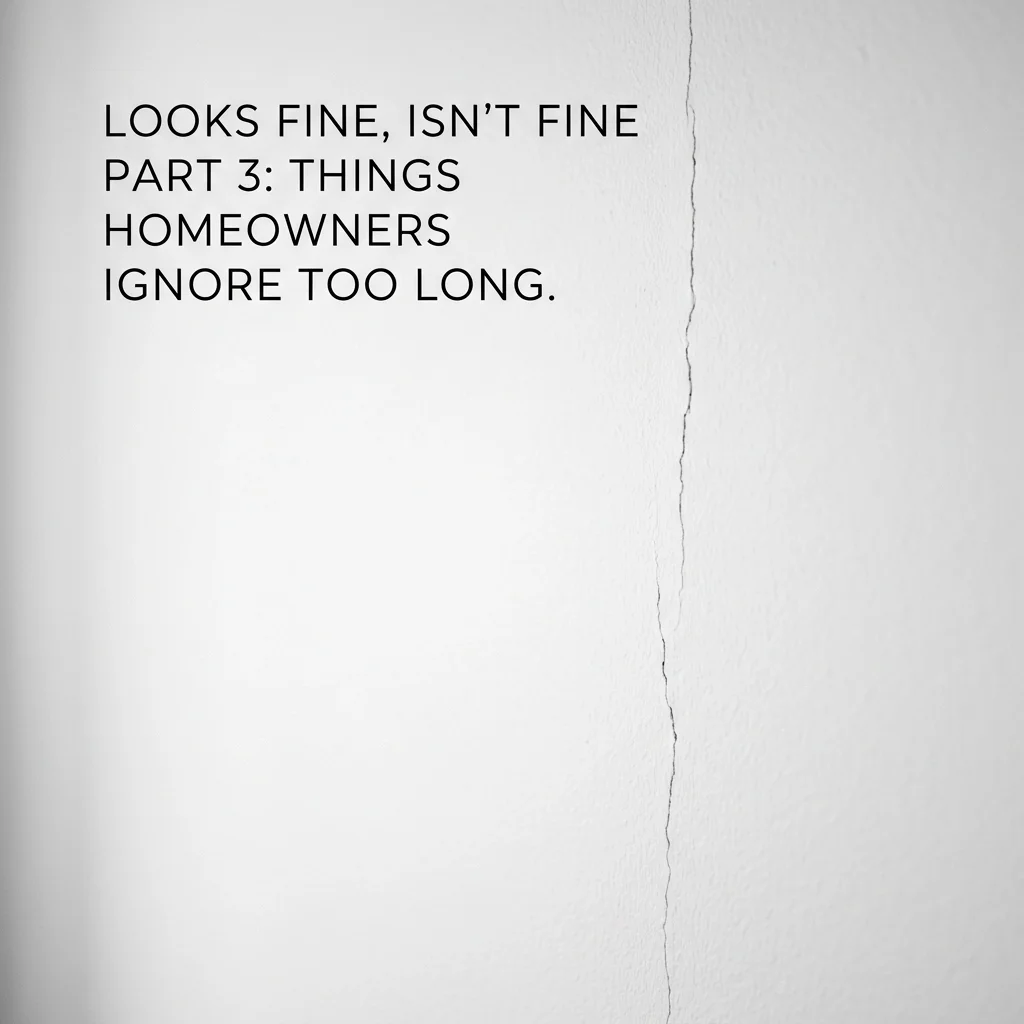
Looks Fine, Isn't Fine Part 3: Things Homeowners Ignore Too Long
Looks Fine, Isn't Fine Part 3: Things Homeowners Ignore Too Long
Hey there, Salt Lake Valley neighbors! We are moving right along with our series on those sneaky home issues that seem like “no big deal” but can quietly turn into expensive repairs.
In Part 1 and Part 2, we covered cosmetic issues and wear-and-tear that can signal deeper problems. Today, we’re focusing on the things many homeowners live with for far too long because they technically still “work.”
In home maintenance, “it still works” is often what people say right before a much bigger repair shows up.
Here are three issues you should not ignore in your Utah home.
1. Slow Drains That “Still Work”
We’ve all seen it. You finish doing dishes and the water lingers before draining. Or your shower starts leaving a shallow pool around your feet.
Since the water eventually drains, it’s easy to ignore.
In many Utah homes, hard water contributes to mineral buildup inside pipes. That buildup can trap hair, grease, and soap residue, gradually restricting flow.
A slow drain does not always mean an immediate failure, but it does mean something is building up in the system. Over time, that restriction can lead to a full clog or backup.
If caught early, clearing a drain is usually straightforward. If ignored, it can lead to overflow, water damage, or more involved plumbing work.
2. Small Exterior Gaps or Cracks
Take a walk around your home’s exterior. Look for small gaps around windows, siding joints, vents, or minor cracks near the foundation.
They may look insignificant, but Utah’s climate makes them more important than they seem.
Seasonal expansion and contraction, combined with moisture from snowmelt and rain, can allow water to work its way into these openings over time.
These gaps can also allow pests to enter or create drafts that affect energy efficiency.
Sealing small openings early helps prevent larger issues later. If you are inspecting higher areas like siding or rooflines, use proper ladder safety or consider bringing in a professional.
3. Minor Grout Damage in Tile Areas
A small crack in grout or a missing section in a shower corner is easy to overlook.
Tile itself is not fully waterproof. The grout and the system behind it are what help manage moisture.
When grout begins to fail, water can gradually make its way behind the tile during regular use. Over time, that moisture can affect the materials underneath.
This does not mean every cracked grout line leads to major damage, but it does mean the protective barrier has been compromised and should be repaired sooner rather than later.
Addressing grout issues early is a simple way to avoid more extensive repairs down the line.
Don’t Wait Until It Breaks
Many larger home repairs start as small inconveniences.
If you’ve been putting off a slow drain, a small exterior gap, or minor grout repair, now is a good time to address it while the fix is still simple.
We help homeowners in Herriman, Riverton, and across the Salt Lake Valley stay ahead of these issues before they turn into bigger projects.
I am a licensed and insured contractor, and at Your Handyman Pros, we focus on catching problems early and fixing them the right way.